LS2 FF901 Advant X Nova White Blue Red – Flip-Up Touring Helmet ECE 22.06 P/J
Prices for Burkina Faso exclude tax · Shipping calculated at checkout
Outside the EU — customs duties and import taxes may apply.
Questions? Just reach out — our team will help you right away.
Size chart LS2 FF901
| Size | Head circumference (cm) | Head circumference (inch) |
|---|---|---|
| XS | 53–54 cm | 20.9–21.3 in |
| S | 55–56 cm | 21.7–22.0 in |
| M | 57–58 cm | 22.4–22.8 in |
| L | 59–60 cm | 23.2–23.6 in |
| XL | 61–62 cm | 24.0–24.4 in |
| XXL | 63–64 cm | 24.8–25.2 in |
| 3XL | 65–66 cm | 25.6–26.0 in |

How to measure your helmet size correctly: To find the right helmet size, measure your head circumference with a flexible tape measure.
It is important that the tape measure runs around the widest part of the head – only then will you get a correct result.
Place the tape measure at the front, about 1–2 cm above the eyebrows, and run it along the sides above the ears.
At the back, the tape must run over the largest part of the back of the head (not too low on the neck). The tape may run slightly at an angle – what matters is that it sits all the way around the largest points of the head.
Make sure the tape measure sits snugly but does not dig in. Measure 2–3 times for the most accurate result. You can then compare the measured value in centimetres (cm) with our size chart.
Tips for an accurate result
- Keep hair flat (e.g. do not measure over a voluminous hairstyle)
- Keep the tape horizontal, i.e. along the largest circumference
- Do not measure too loosely
- For values between two sizes:
→ usually choose the larger size (depending on helmet model / fit)
Important note on fit
The right helmet should fit firmly without causing uncomfortable pressure points.
A new helmet may feel a little tighter at first, as the inner lining adapts slightly over time.
- Worldwide shipping
- Genuine parts & verified quality
- Personal email support
- 14-day returns — in stock ships within 24h
Shipping & Returns
We ship with DHL and FedEx — express on request. If an item is in stock, express delivery can often go out within 1 business day. Standard delivery takes about 2–5 business days domestically and usually around a week worldwide. Please check the available shipping options and delivery times in your cart, as we offer several carriers depending on the country.
Returns must be registered in advance by email and are possible in line with our cancellation policy (14-day return request + 14-day return window after approval). Please note: unregistered returns are not accepted. You'll find all details on conditions, exceptions and refunds in our cancellation policy.
Payment & Security
Payment methods
Your payment information is processed securely. We do not store credit card details and have no access to your credit card information.
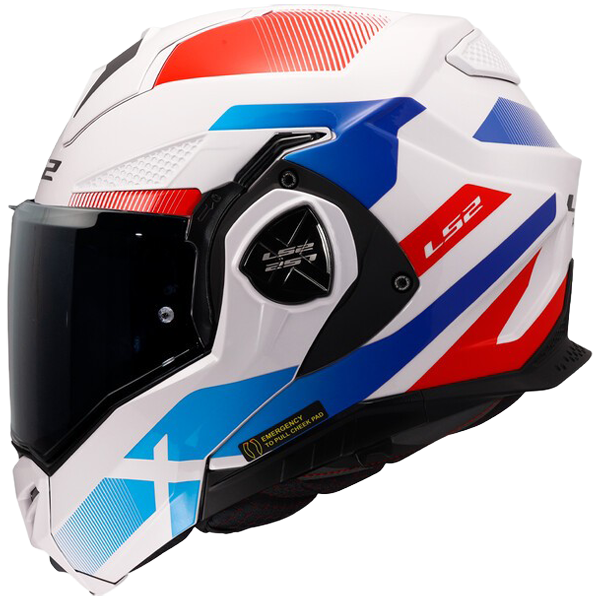
Nova is built from angular blades rather than bands, each one dissolving into fine parallel line-hatching at its trailing edge. On a gloss white base, blue and red blades sweep back from the brow with a lighter blue picking up the lower flank — the brightest and busiest finish in the range.
Four stars from SHARP — and this is the helmet they tested
Independent safety rating: SHARP four stars out of five, tested July 2024 against UN ECE Reg 22.06. We are unusually confident quoting it, because we checked what SHARP actually put on the rig — a composite fibre Advant X weighing 1.6 kg. That is this helmet. The carbon Advant X we also sell has a different shell and a different mass, and its product page carries no stars for exactly that reason.
Zone by zone: at 6.0 m/s and again at 7.5 m/s, five out of five everywhere — front, rear, left, right, crown. At 8.5 m/s the crown, front and rear stayed at five and the sides fell to three, which is where the fifth star went. The chin bar stayed fully locked in 63 % of impacts. SHARP is run by a government transport department, publishes its methodology, and buys the helmets it tests at retail.
About the Nova White Blue Red finish
The hatching is what makes Nova work. Each coloured blade fades out through a gradient of fine parallel lines rather than stopping at a hard edge, so the pattern has depth and movement instead of looking like applied stickers — and it resolves properly at two metres, which many gradient graphics do not. Three colours are in play: a deep blue for the main blades, red for the counter-strokes over the crown and the flank, and a lighter cyan picking out the lower edge and the X mark near the chin bar. The white base does two useful things: it keeps the whole arrangement bright rather than heavy, and it makes this one of the most conspicuous helmets we list without resorting to fluorescent paint. Gloss is the correct finish for it — the hatched gradients need a reflective surface to read as gradients at all, and under matt they would flatten into grey. It is the extrovert of the sixteen, and it suits a sports-tourer far better than it suits a black naked bike.
A chin bar that folds out of the airstream
Look at the profile of this helmet with the chin bar open and you will notice something missing: the block of plastic that normally sits on top. LS2 rotates the Advant X chin bar the whole way round — 180 degrees, down onto the rear of the shell — and the aerodynamic consequence is the entire point of the design.
Riders who have owned a conventional modular helmet will recognise what that fixes: no lift under braking, no low-frequency booming at motorway speed, no sense of the helmet trying to pivot backwards off the head. It turns the open position from a stationary convenience into a genuine riding mode, which combined with the P/J homologation is the case for buying this helmet rather than a full-face.
P and J: two homologations on one label
Two letters on the homologation label do a lot of work: ECE 22.06 P/J. The helmet passed the standard twice, once as a full-face with the chin bar down and once as an open-face with it rotated to the rear. Not every flip-up does. Plenty are P-only and are legal only closed.
Put that together with a chin bar that stows out of the airstream and you have two helmets in one shell, both of them approved. A full-face for motorway miles and winter rain; an open-face for slow mountain roads, city traffic and hot afternoons. Five seconds between them, and no second helmet to carry or store.
HPFC — what the shell is actually made of
HPFC stands for High Performance Fibre Composite — a laid-up glass-fibre-based laminate, not an injection-moulded thermoplastic. The distinction matters more on a modular helmet than on a full-face, because a flip-up shell has to carry the chin-bar pivot, its locking mechanism and the sun-visor housing as moulded-in geometry while still passing an impact test at every one of those interruptions.
A composite shell handles that better than thermoplastic for a simple reason: fibre can be laid where the load is. It is also the shell SHARP put on the rig, so its behaviour under impact is not a claim on this page — it is a published measurement with a four-star result attached.
What the ECE 22.06 plaque actually means
The ECE 22.06 plaque riveted to the chin strap is the physical proof of a test regime that changed substantially in 2021. Impact points went from five to as many as eighteen. Testing gained a second, lower speed, because a helmet that performs at 8 m/s does not automatically perform at 6. And an oblique test was added: the shell is dropped onto an angled abrasive anvil while instruments measure rotational acceleration against the Brain Injury Criterion.
Everything fitted to the helmet is tested as fitted — visor, sun visor, vent covers. Since January 2024, no helmet without 22.06 may be sold new in the EU, which is also why 22.05 stock disappeared from shelves so abruptly.
The tabs a paramedic looks for
There is a yellow label on the lower edge of this helmet that reads "EMERGENCY — TO PULL CHEEK PAD". It is not decoration. Behind it sit pull tabs that let a first responder draw the cheek padding out sideways, so the shell can be lifted clear of an injured rider's head instead of being dragged over a neck that may be broken. Ambulance crews are trained to do exactly this, and most helmets do not let them.
The rest of the retention system is a micrometric buckle with a metal ratchet on a reinforced strap. Set the length once and every ride afterwards is one click in, one pull out, with gloves, in the dark. Metal rather than plastic matters here because the ratchet teeth carry the load and because a metal buckle does not creep out of adjustment over a season.
Three screens, one shell
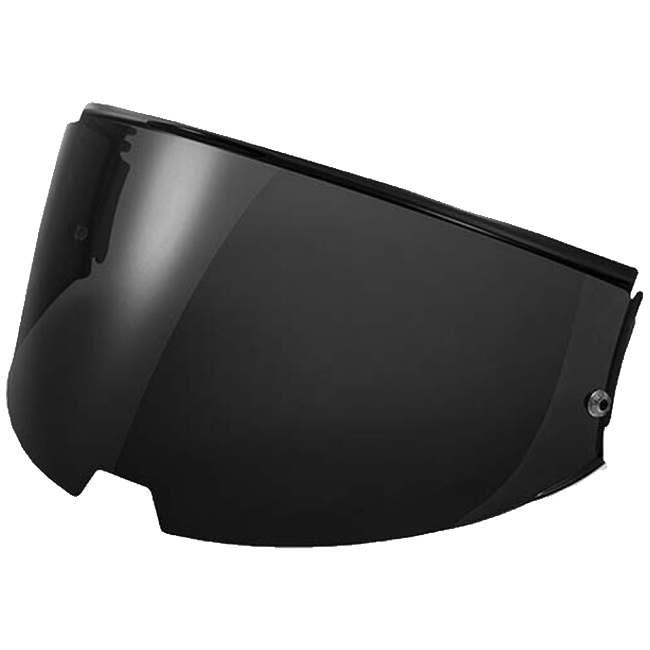
Count the glass: a clear visor on the helmet, a tinted visor in the backpack, and a tinted sun visor inside the shell on a slider. That covers every light condition a rider meets without buying anything, and the outer screens swap over in about a minute with the tool-free quick-release.
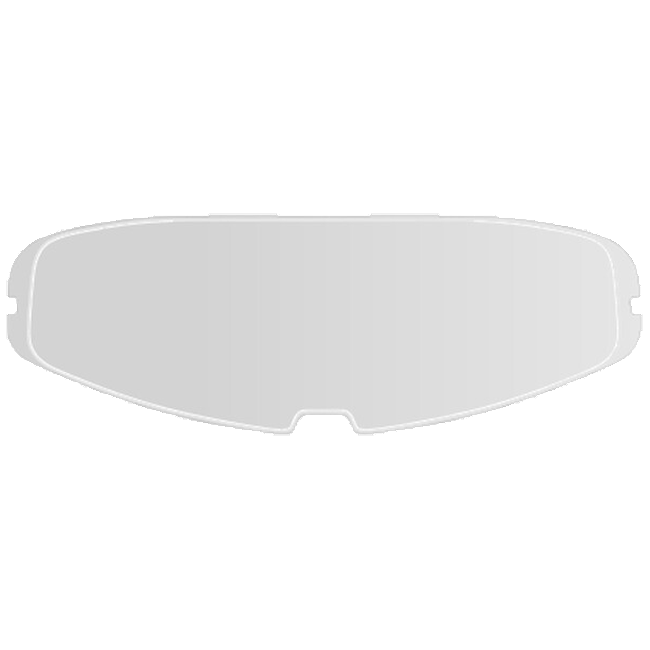
Fitted to the clear screen is a Pinlock® 120 MaxVision™ XLT anti-fog lens, part DKS433. Pinlock grades its inserts by how much water vapour they absorb before they give up, and 120 is the top grade — the difference between waiting at a cold set of lights and having to lift the visor to see. Six replacement outer screens are listed for this helmet, including three iridium finishes.
In at two ends, out at the back
The vents are the practical half of this helmet's touring argument, and all of them are operable in winter gloves — which is not a given. The chin vent is adjustable and aimed at the inside of the visor and your face. The crown vent feeds ducts cut through the polystyrene. The rear exhaust port pulls the warmed air out the back.
Channelled EPS is worth calling out because plenty of helmets have vents that lead nowhere: air enters the shell, meets the polystyrene and stops. Ducts through the liner foam are the difference between a vent you can feel on your scalp and one you can only see from outside.
Fit, and the honest word on two shells
XS to 3XL, two shells: one covering XS through L, one covering XL through 3XL. The honest reading of that specification is this — the smallest sizes sit inside a shell designed around a larger head, with thicker EPS taking up the slack. Safe and certified, but visually a size up and a few grams heavier than a dedicated small shell.
Almost every premium flip-up does the same, because a modular shell carries the pivot, the latch and the sun-visor housing as moulded-in geometry. Three shells would mean three of those tools. For M, L and XL riders the trade is unambiguously worth it; for an XS, try before you commit.
The liner, and one claim we are not making
Interior specification, plainly: laser-cut foam, hypoallergenic, breathable, fully removable and machine-washable. Laser cutting sounds like marketing until you have worn a die-cut pad — the ability to change density and profile across a single piece is what turns padding into a shaped fit.
It is also the part that decides how long the helmet lasts you, and the part riders most often misdiagnose. Foam compresses under load and breaks down chemically from sweat and hair oils; as it does, the fit loosens, the helmet starts to move, and the owner concludes the helmet is finished when the shell is untouched. A replacement interior costs a fraction of a new helmet, and we stock it in every size.
Before you buy an intercom
Intercom compatibility, stated honestly: this helmet works with the current LS2 communication system, and the base plate attaches with adhesive rather than a clamp. There is no bracket slot. If you have been moving a single unit between two helmets, that habit does not transfer here.
It is worth understanding why. A clamp mount needs a machined gap between the shell edge and the cheek pad, and designing that gap into a modular shell — which already has a pivot, a latch and a sun-visor housing cut into it — means one more interruption in a structure that has to pass an impact test at every opening. LS2 kept the shell closed and mounted on the surface instead.
On noise
Wind noise is the specification manufacturers never quote, because it depends more on your bike than on their helmet. What the helmet controls is the seal at the neck roll, the gap under the chin bar and the vents. A chin curtain is fitted as standard, and it is the single most effective piece of quiet in the box — provided it stays in the helmet after you clean it. The 180-degree chin bar helps here: a modular bar parked on the crown sits in clean air and drums, while one lying flat behind the head does not.
What it does not control is the airflow leaving your screen. If a helmet is loud on one motorcycle and quiet on another, the screen is usually the reason. Plugs cost a euro and do more than any shell shape.
1600 grams on a flip-up
1600 grams, ±50, on a mid-size shell without accessories. That is the number LS2 publishes, the number moulded onto the label inside the shell, and the number SHARP recorded when they weighed the helmet they tested — three independent sightings of the same figure, which is more than most specifications get.
What it buys: a composite shell, an internal sun visor and its mechanism, a certified chin bar that rotates 180 degrees, an emergency cheek-pad release and a metal buckle. Strip any of those out and the helmet gets lighter; keep them and 1600 grams is a reasonable price. The carbon model saves 50 grams and costs 70 euros more.
Carbon or composite? A straight answer
Composite or carbon? Both exist, both are Advant X, and the honest summary is short. This helmet: HPFC composite, 1600 g, from 399 €, four SHARP stars from a July 2024 test. The Advant X Carbon: carbon 6K shell and chin bar, 1550 g, from 469 €, X-Static silver liner, no rating of its own.
Identical between them: the 180-degree chin bar, the ECE 22.06 P/J dual homologation, the Twin Visor System with a tinted second visor and Pinlock 120 XLT supplied, multi-density EPS, the emergency release, the micrometric metal buckle, two shell sizes across XS–3XL, and the same replacement parts for everything except the shell-coloured panels. Choose on weight and finish, or choose on the test result.
Where it sits in our LS2 range
Two flip-ups and three full-face models frame this helmet in our LS2 line-up. Read the table for what the folding chin bar costs against a comparable composite full-face, and what the carbon Advant X costs above it.
| Model | Type | Shell | Weight | RRP |
|---|---|---|---|---|
| FF818 Storm III | Full-face | KPA | 1600 g | from 199 € |
| FF811 Vector II | Full-face | HPFC | 1500 g | from 259 € |
| FF817 Challenger II | Full-face | HPFC | 1500 g | from 329 € |
| FF901 Advant X | Flip-up (P/J) | HPFC | 1600 g | from 399 € |
| FF901 Advant X Carbon | Flip-up (P/J) | Carbon 6K | 1550 g | from 469 € |
When something wears out
Worth knowing before you buy rather than after: everything on this helmet that wears out can be replaced individually. Liners in all seven sizes cheek pads, six replacement visors from clear through to iridium gold, the tinted sun visor and its mechanism, complete replacement chin bars in every colourway, chin, top and rear vents in matching finishes, ratchet plates, pins and the chin curtain.
The interior is the part that decides how long the helmet stays honest. Sweat and hair oils break down the foam, the fit loosens, and riders conclude the helmet is finished when the shell is untouched. The full parts list is in the FF901 Advant X Kit.
In the box
- LS2 FF901 Advant X helmet — Nova White Blue Red
- Carrying backpack
- Tinted visor
- Pinlock® 120 MaxVision™ XLT anti-fog insert (DKS433)
- Reflective stickers
Specification
- Model — LS2 FF901 Advant X
- Part number — 569012502
- Colour — Nova White Blue Red — Nova graphic, gloss white with blue and red
- Homologation — ECE 22.06, dual P/J (protective and jet)
- Safety rating — SHARP 4 of 5 stars (tested July 2024, ECE 22.06)
- Helmet type — Flip-up / modular, chin bar rotating 180° to the rear
- Shell — HPFC fibre composite, two shell sizes (XS–L / XL–3XL)
- Weight — 1600 g (±50 g)
- Sizes — XS to 3XL (seven sizes)
- Anti-fog — Pinlock® 120 MaxVision™ XLT (DKS433) supplied
- Visor — Twin Visor System, scratch-resistant, UV-stable, quick-release; tinted second visor supplied
- Sun visor — integrated, tinted, drop-down
- Impact liner — multi-density EPS with moulded ventilation channels
- Retention — micrometric metal buckle, reinforced chin strap, emergency release system
- Ventilation — chin intake, top intake, rear exhaust port, breath deflector
- Liner — laser-cut foam, hypoallergenic, breathable, removable and washable (no antibacterial treatment specified)
- Intercom — prepared for the LS2 intercom — adhesive mount only, no clamp slot
| Model | LS2 FF901 Advant X |
|---|---|
| Part number | 569012502 |
| Colour | Nova White Blue Red — Nova graphic, gloss white with blue and red |
| Homologation | ECE 22.06, dual P/J (protective and jet) |
| Safety rating | SHARP 4 of 5 stars (tested July 2024, ECE 22.06) |
| Helmet type | Flip-up / modular, chin bar rotating 180° to the rear |
| Shell | HPFC fibre composite, two shell sizes (XS–L / XL–3XL) |
| Weight | 1600 g (±50 g) |
| Sizes | XS to 3XL (seven sizes) |
| Anti-fog | Pinlock® 120 MaxVision™ XLT (DKS433) supplied |
-
1× helmet
-
Carrying backpack
-
Tinted visor
-
Pinlock® 120 MaxVision™ XLT anti-fog insert (DKS433)
-
Reflective stickers
Fitment data coming soon.
No reviews yet.
Build your kit
Gear up your FF901 Advant X.
Add the parts made for this helmet — your total updates live.
 Built-in sun visor
Included
Built-in sun visor
Included
 LS2 Pinlock 120 MaxVision XLT Insert DKS433
Included free
LS2 Pinlock 120 MaxVision XLT Insert DKS433
Included free
helmet only
Your helmet is always included · anything marked Included already comes with it · pick your size in the buy box above
// LS2
LS2 FF901 Advant X Nova White Blue Red – Flip-Up Touring Helmet ECE 22.06 P/J
Tech specs
- Model
- LS2 FF901 Advant X
- Part number
- 569012502
- Colour
- Nova White Blue Red — Nova graphic, gloss white with blue and red
- Homologation
- ECE 22.06, dual P/J (protective and jet)
- Safety rating
- SHARP 4 of 5 stars (tested July 2024, ECE 22.06)
- Helmet type
- Flip-up / modular, chin bar rotating 180° to the rear
- Shell
- HPFC fibre composite, two shell sizes (XS–L / XL–3XL)
- Weight
- 1600 g (±50 g)
- Sizes
- XS to 3XL (seven sizes)
- Anti-fog
- Pinlock® 120 MaxVision™ XLT (DKS433) supplied
// Support
Frequently asked questions
Shipping & delivery
Estimate your shipping
Get the real shipping cost for this item to your address — the same rates as checkout.